

What are Dentures?
Dentures are removable appliances that replace missing teeth and the gum tissue around them. They are crafted from acrylic materials to look natural and restore proper bite function. In some cases, patients may also consider dental crowns, dental bridges, or dental fillings to complement their dentures or preserve remaining teeth.
Modern denture teeth come in a wide range of shades, shapes, and sizes, so we can easily select the right teeth to complement your skin tone, facial structure, gender, and personality.

The following types of dentures are available.
- Full dentures.
- Partial dentures.
- Flexible dentures.
- Immediate dentures.
- Implant dentures.
- Full Dentures
Full dentures are designed to restore a complete arch of missing teeth in your upper or lower jaw, or in both jaws. A full denture has a gum-colored base made of acrylic that fits over your gums and jawbone. The acrylic base supports denture teeth arranged to replicate real teeth closely.
- Partial Dentures
Partial dentures can replace one or several teeth in an arch, and they do not need to be side-by-side. They are similar to a full denture in that they have a gum-colored acrylic base, which is usually strengthened with a metal substructure. The metal substructure is made from a lightweight alloy, such as cobalt chrome.
A partial denture also sits on your gum and jawbone, but additional retention is given by metal clasps that fit around existing teeth—these help to keep the partial denture more securely in place.
Occasionally, special attachments are also used, which are attachments on the partial denture that clip onto slots in specially made dental crowns that are fitted over natural teeth.
- Flexible Partial Dentures
Flexible dentures are made from nylon and are suitable for people who find it difficult to wear rigid acrylic dentures. The nylon is gum-colored but quite translucent, and clasps that fit around natural teeth are made from the same material.
These dentures, also called Nesbit partial dentures, can be a good solution, but they aren’t as strong as ordinary partial dentures.
- Immediate Dentures
Immediate dentures are made before natural teeth are extracted, so they are ready to fit soon afterward. They are made by adapting a model of your mouth to ensure they fit reasonably well.
After natural teeth are removed, it takes several months for the gums and jawbone to heal fully. During this time, these tissues change shape substantially, so an immediate denture is likely to be relined several times.
A denture reline is when new acrylic material is added to the fitting surface to accommodate the changing shape of your gum and jawbone, ensuring the denture fits more snugly and offers better retention.
Once healing is complete, a permanent denture is made to replace your immediate denture.
- Implant-Supported Dentures
An implant-supported denture looks like an ordinary denture, but doesn’t rest directly on your gums. Instead, it is designed to clip onto dental implants inserted into your jawbone. It is still a removable device, so you can snap it out of your mouth whenever you want to clean it.
Learn much more about implant-supported dentures and other implant solutions on the webpages dedicated to these services.
Benefits of Modern Dentures
Modern dentures are quite different from the dentures you may remember older family members wearing, which often appeared noticeably false. The latest dentures look entirely natural.
Our custom-designed dentures can boost self-confidence and offer the following benefits.
- Improved aesthetics by supporting your cheeks and lips, creating a fuller, more youthful appearance.
- Improved biting and chewing strength.
- An affordable solution with a choice of denture teeth to suit all budgets.
- Custom-fit for increased stability and retention.
Who is a Good Candidate for Dentures?
Dentures can be a good choice if you are:
- Missing one or multiple teeth, or all your teeth.
- Looking for an economical way to replace missing teeth, especially as we offer affordable dentures.
- Looking for a removable appliance that will be easy to keep clean.
- Having trouble eating certain foods.
- Have noticed your facial features are starting to collapse inward without the support of natural teeth.
Dentures can also be a good temporary solution, for example, if you think you might want dental implants later but aren’t yet ready or able to have them right now.
The Denture Process
Several steps are involved in making your denture, as it is important to ensure it fits exactly right. Below is a brief outline of what to expect.
- Consultation and Dental Exam
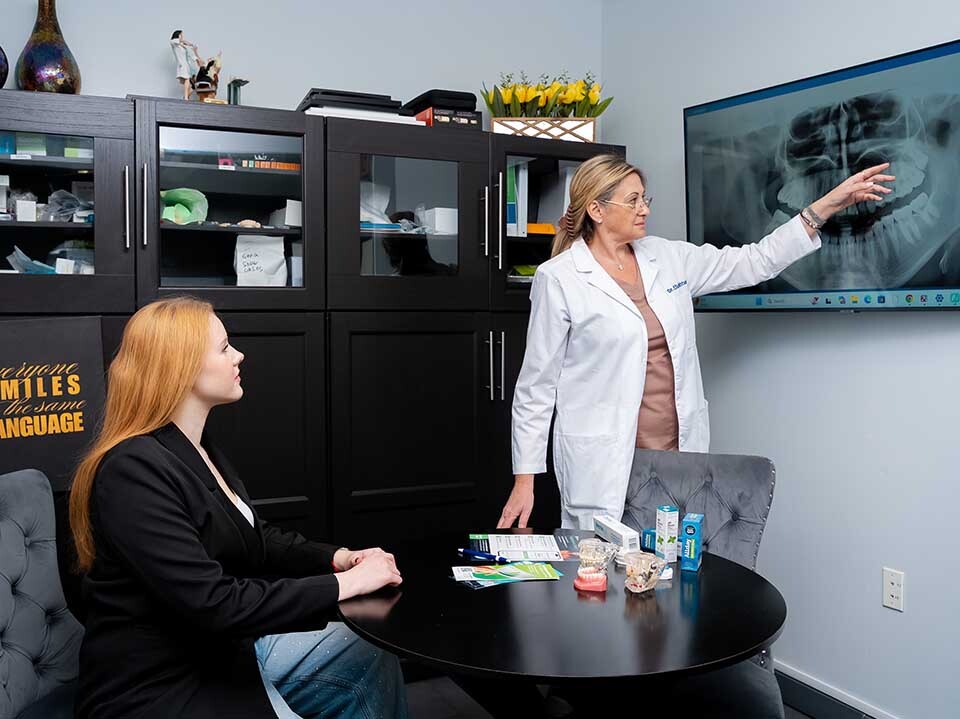
Every treatment begins with a thorough consultation and dental exam. Our dentist will discuss your treatment goals to determine if dentures are a suitable option for your needs.
You will also learn how much your dentures cost. The price can depend on the number of teeth requiring replacement and the quality of denture teeth selected.
- Dental Impressions
We will need to take detailed dental impressions of your mouth, and if you have any existing teeth, we can determine whether they must be removed or can be saved.
We also take detailed records of your bite, measuring the height between your upper and lower jaws and specific measurements such as the midline, so we can ensure your denture teeth are arranged correctly. Sometimes, a series of impressions is taken to achieve an optimal fit.
At this point, we will help you choose the right denture teeth. These will be used during the wax or try-in stage.
- Wax Try in
A wax try-in is when your denture teeth are set in a wax base that mimics the acrylic base of your new denture. Using wax enables our dentist to check the fit more easily and make any adjustments to your bite and to the arrangement of your teeth.
At this stage, you can also get a good idea of how your denture will look and provide input on any adjustments to the positioning of your new teeth and their general feel.
- Denture Fabrication
Once we are entirely happy with how your teeth are arranged, your bite, and the shape of the wax base, it is sent back to the dental lab so the wax can be replaced with acrylic. The denture is hand-finished and polished, and is sent back to us for fitting.
- Denture Fitting
We will try your new denture, check its fit and comfort, and look for any pressure points. Before we send you home, we will give you lots of information on caring for your denture and provide some tips on getting used to wearing it.
- Adjustments
You will most certainly need a follow-up visit a week or so later to make minor adjustments to your denture. This is perfectly normal, and the adjustments will help it fit more comfortably.
Getting Used to Dentures
It always takes a little time to get used to any new appliance, but the following tips will help you get accustomed to wearing your dentures.
- Eating. Choose soft, easy-to-eat foods initially, and try to chew evenly on both sides of your mouth to ensure your denture remains in place. As you get used to your dentures, you can begin eating a greater choice of foods. If the denture becomes dislodged, reposition it with your tongue, then bite down gently.
- Talking. Some people find that their dentures will click when they talk or will develop a slight lisp. If this is the case, practice talking at home, and gradually your speech will return to normal.
Caring for Dentures
- Remove your denture at bedtime and leave it out overnight to allow your gums to recover.
- Follow our instructions on how to clean dentures, using mild dish soap or a proprietary denture cleaner and a soft denture brush.
- Soak your dentures overnight in a denture solution that is designed to help prevent plaque and tartar buildup, and which will freshen them up.
- Soaking your dentures overnight is essential, as if they dry out, they could warp.
- Don’t forget to clean your mouth after removing your denture and to brush any remaining teeth. This will help remove food debris and plaque. You should brush again before you reinsert your denture in the morning.
Dentures can restore your smile and improve comfort and chewing function when natural teeth are missing. At Dental Pearl Miami in North Miami Beach, FL, we offer custom denture solutions designed for a natural look and comfortable fit. Book dental appointment today to regain your confident smile.
Frequently Asked Questions
How Long Will Dentures Last?
Usually, you can expect a denture to last 5 to 7 years before you need to replace it. We suggest that you bring it to every dental exam so we can check its condition for signs of wear and tear and recommend a timely replacement when needed.
Can Dentures Be Repaired?
Yes, but you must have them professionally repaired. If your denture breaks, contact us immediately, and we can arrange a quick denture repair.
Do Dentures Hurt?
We take enormous care when designing dentures to ensure they fit comfortably and they shouldn’t feel painful. When you first receive a new denture, it may rub the gums slightly, but minor adjustments will ensure it fits snugly.
14771 Biscayne Blvd.,
North Miami Beach, FL 33181
(305) 816-6620
Updated on by Dr. Ella Dekhtyar, DDS (Cosmetic & Family Dentist) of Dental Pearl Miami