
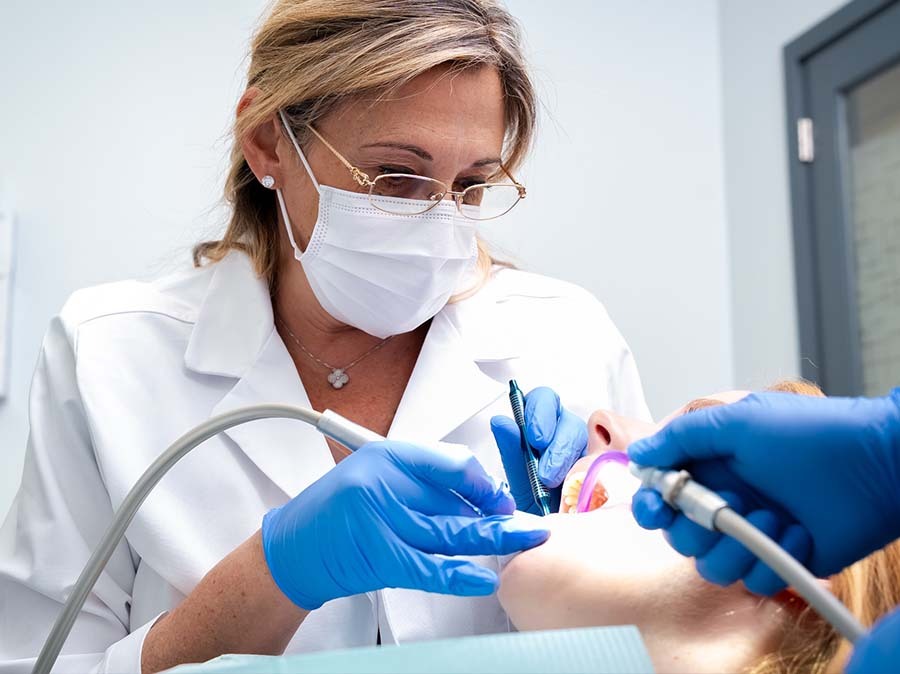

What is Endodontics?
Endodontics is an area of dentistry that treats the innermost part of the tooth, the dental pulp. This is the part right in the tooth’s center, a collection of soft tissues. These tissues extend into the root canals, deep in the tooth roots.
These soft tissues can become infected if exposed to harmful bacteria. They can also become inflamed if a tooth is injured through trauma, such as a blow to the mouth. The result can be a painful tooth.
Endodontics is required to diagnose the source of the pain and to treat the tooth by removing the infected or inflamed dental pulp tissue. It is an excellent treatment that can save the tooth from extraction.
The dental pulp is essential during tooth development, as it contains connective tissues, nerves, and blood vessels. Once the tooth is fully developed, it can survive without the dental pulp but becomes non-vital.
Who Is an Endodontist?
An endodontist is a dental specialist, meaning they have first qualified as a general dentist before continuing their training for a further two or three years. During this time, they gain advanced skills in treating issues affecting the tooth and its root. They can use the most up-to-date treatments, such as microscope-assisted procedures.
When to See an Endodontist
General dentists are trained to provide endodontic care, and some have a special interest in this field, so seeing a dental specialist is not always necessary. However, there are times when seeing an endodontist is preferable, and we will recommend you see a dental specialist if your endodontic care is likely more complex.
Signs You Need Endodontic Treatment
Various symptoms can indicate something is wrong with the tooth and include:
- Persistent toothache.
- Sensitivity or pain when eating anything hot or cold.
- Gum swelling around the tooth.
- A pimple or fistula developing on the gum nearest the tooth.
- Color changes to the tooth so it can look darker.
- Visible injury to a tooth, so it may have deep decay or be cracked.
- A potential failure of previous root canal therapy.
If you experience any of these symptoms, it is important to have the affected tooth examined by a dentist. Early evaluation can help identify the cause of your symptoms and determine whether endodontic treatment may be needed to protect the tooth and prevent the condition from worsening.
Conditions Treated by Endodontists
Endodontics can treat many different conditions affecting a tooth, including:
- Severe dental injuries. If a blow to the mouth inflames the pulp, it can start to swell, and the increased pressure in the tooth can cause pain.
- Severe tooth decay. A deep cavity can reach the dental pulp, allowing the bacteria that caused the decay to begin infecting the pulp tissues.
- Dental abscesses. When a pimple develops on the gum near the painful tooth, it may indicate a buildup of pus from a dental abscess. This occurs when an infection has spread beyond the tooth root canals and into the surrounding tissues.
- Root canal reinfections. Occasionally, a root canal can become reinfected, sometimes many years later, and further treatment may be needed to remove the infection and save the tooth.
Regardless of the cause, prompt endodontic treatment can help control the infection or inflammation, relieve discomfort, and preserve the affected tooth whenever possible. If you experience symptoms such as persistent tooth pain, swelling, or sensitivity, an endodontic evaluation can help determine the appropriate treatment.
Endodontic Treatments Provided at Dental Pearl
Our dental office can provide the following endodontic treatments.
- Root canal procedures, including root canal retreatment and emergency root canal services.
- Emergency endodontics, for example, when a dental abscess develops.
If you have noticed something feels wrong with a tooth and are concerned it might be infected, we strongly recommend contacting us for endodontic care. The sooner we treat the tooth, the better the chance we have of saving it.
Leaving a problem to continue will allow it to worsen, making treatment more difficult, more costly, and longer. There is even the risk that we may not be able to save the tooth.
It’s important to remember that a tooth infection will not clear up without professional dental care. If the pain seems to disappear, it may just mean that the tooth nerve has died, but the infection will remain and continue to progress.
Benefits of Endodontic Treatment
Endodontic treatment can provide several important benefits. These include:
- Preventing tooth extraction.
- Providing quick relief from pain.
- Saving your natural tooth is more cost-effective.
- Endodontic treatment can restore a tooth to full functionality.
- Treatment prevents a serious infection from spreading into your bloodstream and potentially becoming life-threatening.
Endodontic care, including root canal treatment, helps relieve pain and preserve natural teeth by treating infections deep inside the tooth. At Dental Pearl Miami, our skilled team uses advanced techniques to make treatment comfortable and effective. Make your dental appointment today to protect your smile and dental health.
Frequently Asked Questions
Is Endodontic Treatment Painful?
Endodontic treatment, such as root canal therapy, has an undeserved reputation for being painful, but you can rest assured that your treatment will be pain-free. Firstly, we numb your mouth before beginning treatment, and secondly, it can provide quick relief from a severe toothache.
What Happens If I Don’t Have Endodontic Care?
If you don’t see a dentist for endodontic treatment, you run a high risk of losing the tooth. There is also the risk that the infection will spread, affecting the tissues surrounding the tooth and potentially your overall health.
Is Treatment Covered by Dental Insurance?
Endodontic treatment is clinically necessary, so your dental insurance should cover it. The exact percentage of coverage may vary, so it’s worth contacting your health care provider, or you can talk to our friendly dental team. We can help you determine how much of the treatment is covered and if there are any out-of-pocket costs.
14771 Biscayne Blvd.,
North Miami Beach, FL 33181
(305) 816-6620
Updated on by Dr. Ella Dekhtyar, DDS (Cosmetic & Family Dentist) of Dental Pearl Miami