

What Are Wisdom Teeth?
These teeth are your third molars, and are right at the back of your mouth. They are large teeth designed for grinding up and chewing food, and most people have one on either side of the upper and lower jaws, making a total of four.
However, not everybody has all of their wisdom teeth. Some people have only one or two. Others have none.
When Is Wisdom Tooth Extraction Needed?
One of the main issues with wisdom teeth is that they come through last, at which point the rest of your natural teeth are firmly established, leaving little to no room for these large teeth to erupt properly.
Consequently, wisdom teeth may try to erupt beneath adjacent teeth and become impacted or stuck in the jaw. Sometimes a cyst can develop around these teeth.
They might come through sideways or partially erupt. In this case, they can remain partially covered with gum tissue, making them difficult to clean and increasing the risk of tooth decay and gum disease.
While it is nice to have an extra set of molars, they are not necessary. They are a throwback to a time when people had larger jaws, developed by eating harder-to-chew foods, unlike today’s more processed, softer-to-chew foods.
Reasons for removing wisdom teeth include:
- A lack of space for them to erupt properly.
- Teeth that come through angled or sideways.
- Gum inflammation around a partially erupted tooth.
- Tooth decay.
- Damage to adjacent teeth.
- Cyst formation around an impacted tooth.
Signs You May Need Your Wisdom Teeth Removed
Signs that your wisdom teeth need removing can include:
- A stiff or painful jaw.
- Bleeding, swollen gums.
- An unpleasant taste.
- Bad breath.
- Problems opening your mouth.
- Headaches.
- Earache.
- Visible signs that a wisdom tooth is only partially erupted.
Types of Wisdom Tooth Removal
There are two different types of wisdom teeth extractions. These are simple extractions or surgical extractions.
Simple Wisdom Tooth Extractions
Simple extractions are very straightforward and are performed when a wisdom tooth is visible in the mouth. In this case, our dentist can use specialized tools to loosen the tooth and remove it.
Wisdom Teeth Surgery
A surgical extraction is used when a wisdom tooth is impacted, meaning it is stuck beneath the gum. In this case, wisdom teeth surgery is required, where we will need to make a small incision in the gum and bone to expose the impacted tooth underneath.
Once exposed, the tooth can be sectioned or cut into smaller pieces, allowing us to remove it through a smaller hole.
The Wisdom Tooth Removal Process in North Miami Beach
Several steps are involved when planning and pulling wisdom teeth. These are outlined below.
- Consultation, Dental Exam, and Diagnostic Imaging
During your consultation, we will discuss any symptoms you are experiencing. An oral exam is needed to examine the tooth more closely. During this visit, your dentist may also perform oral cancer screening to ensure comprehensive oral health.
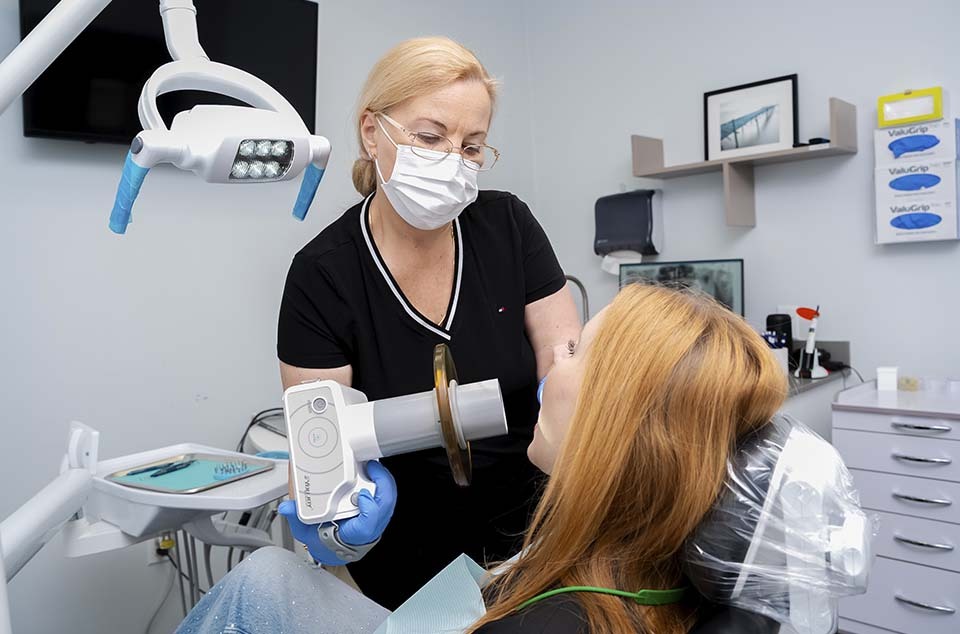
We use diagnostic imaging, including digital dental X-rays and possibly a cone beam CT scan, to identify the exact location of the wisdom tooth so we can clearly visualize its angulation and determine whether it can erupt normally.
If we determine it needs to be removed, we can make a suitable treatment plan. We will also discuss whether you need sedation dentistry for this procedure, as it is extremely important to us that you remain comfortable and relaxed during your wisdom tooth removal.
- Wisdom Teeth Extraction
On the day of the procedure, we can ensure your mouth is properly numbed and provide sedation dentistry when needed. We will check on you frequently to ensure you remain comfortable and relaxed throughout this procedure.
The exact treatment process will depend on whether the extraction is simple or surgical.
- Cleaning the Empty Socket
Once the tooth is removed, we thoroughly clean the empty socket. We use a gauze pad and gentle pressure to stop the bleeding. This helps a protective blood clot to form in the empty socket.
Patient Experience
Recovery after Wisdom Tooth Extraction
Before you leave our dental office, we discuss what to expect during the first few days of recovery after wisdom teeth removal or any tooth extraction, how to care for your mouth, and what foods to avoid to ensure proper healing.
Pain Relief and Controlling Swelling and Bruising
We may recommend using over-the-counter pain relief before the anesthetic wears off to help you remain comfortable and pain-free. You will likely have some localized swelling, and applying cold packs to the outside of your face can help reduce it and bruising.
After the first day, switch to moist heat to help continue healing and reduce swelling.
Oral Hygiene
It’s important to continue brushing and flossing the rest of your teeth, but avoid cleaning near the extraction sites. Our dentist might suggest you use an antimicrobial mouthwash and swish it gently around your mouth. It’s important to avoid swishing it too vigorously, as this could dislodge the protective blood clots in your empty tooth sockets.
Diet
Your mouth and jaws may feel slightly sore for the first few days, so you will almost certainly find it more comfortable to choose foods that require minimal or no chewing and are cooler. Avoid anything very hard or spicy.
Also, avoid anything containing nuts, seeds, or that is crunchy. Small pieces of food can get stuck around the extraction site, and these can be tricky to remove comfortably.
Other Things to Avoid
If you smoke, you need to quit for the duration of healing. The sucking action can dislodge the blood clot, slowing healing. It’s also inadvisable to use drinking straws, which also require a sucking action.
Avoid strenuous exercise, as it can increase blood flow and potentially cause bleeding.
Dry Socket
Protecting the blood clot in the empty socket is important because if it is dislodged, the socket can become infected. This is a condition called dry socket, which is easy to treat by cleaning the socket and packing it with a protective dressing. However, it can cause pain initially and delay healing.
Wisdom tooth removal is a standard oral surgery procedure. Although you may have some minor discomfort for a few days afterward, healing should be relatively quick, smooth, and uneventful.
Please remember that we are always here to help and advise you if you have any concerns or questions about your recovery after wisdom teeth removal.
Wisdom teeth removal can prevent pain, infection, and alignment issues before they become serious. At Dental Pearl Miami in North Miami Beach, FL, our skilled team provides safe, effective extraction with patient‑focused care. Schedule your dental appointment today to protect your oral health and comfort.
Dental Pearl Miami14771 Biscayne Blvd.,
North Miami Beach, FL 33181
(305) 816-6620
Updated on by Dr. Ella Dekhtyar, DDS (Cosmetic & Family Dentist) of Dental Pearl Miami