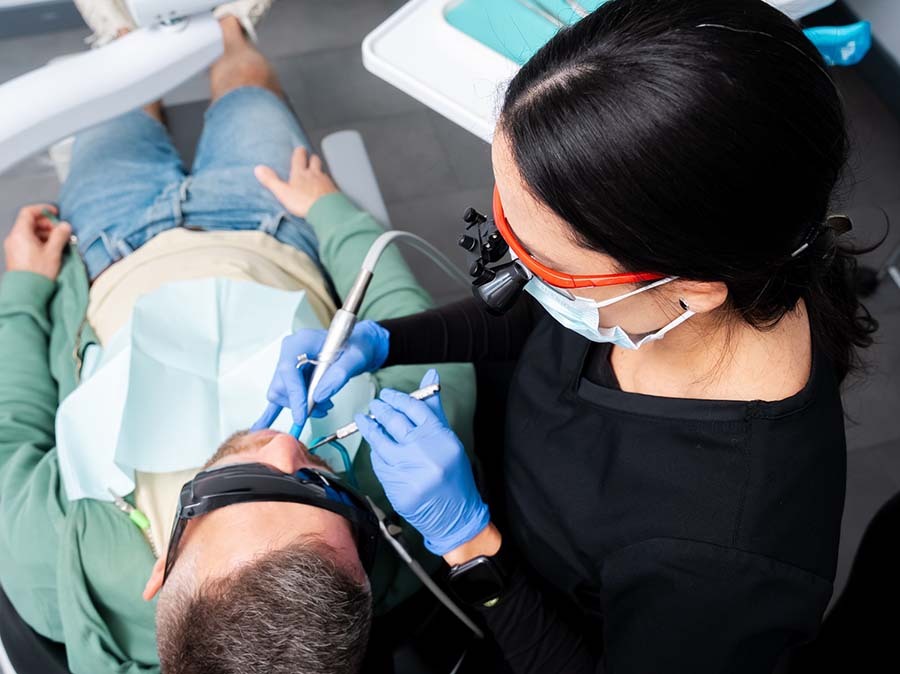

Oral surgery is designed to protect your oral health and relieve any pain or discomfort caused by tooth problems. These surgical treatments are procedures not routinely required, and which include:
We may recommend oral surgery if you have teeth that are infected, severely decayed or painful, or impacted and unable to erupt properly. Oral surgery can also help if you have advanced gum disease that has caused teeth to loosen and must be removed.
Dental Pearl can help you if you’ve been searching for an emergency oral surgeon near me because of a severe and painful tooth infection.
We know nobody likes to lose teeth, which is why we always try very hard to save them. Unfortunately, this isn’t always possible when a tooth is too badly damaged to restore.
After exhausting all other options, we will recommend removing the problem tooth. Dental oral surgeons can ensure this process is pain-free, carefully removing teeth while protecting the bone and gum around them.
By the time your wisdom teeth erupt, all of your other natural teeth are already in place. Therefore, it’s not unusual for wisdom teeth to become impacted because of insufficient room in your jaw.
We can ensure your wisdom teeth are removed with minimal discomfort using the best oral surgery techniques.
A brief overview of the treatment process is outlined below, but the exact procedure will depend on your oral health needs. If you are in pain and require emergency oral surgery, we make every effort to see you quickly.
When you visit our practice, we will conduct a comprehensive oral exam and discuss your symptoms. We review your dental and medical history to identify any factors affecting your oral health and to ensure we plan your treatment safely.
You will need digital dental X-rays, and we may also recommend a cone beam CT scan, which provides a clear 3-D image of your teeth and jaws. These are used to create your personalized oral surgery plan.
We will discuss this plan with you in detail and tell you how to prepare for your oral surgery. For example, we may need you to discontinue taking certain medications, and this might be an occasion when we need to liaise with other healthcare providers looking after you.
We will take care to ensure you feel calm, relaxed, and comfortable before we begin, and we can provide sedation dentistry tailored to meet your needs. You may not require sedation if you only need a single tooth removed, as the procedure is very quick; however, if you need several wisdom teeth removed, sedation can make the process more pleasant.
After numbing your mouth and checking that you are okay to begin, we will remove the problem tooth or teeth. The technique used depends on whether the tooth has fully emerged or is stuck beneath your gum, as can be the case with impacted wisdom teeth.
Before you leave to go home and rest and recover, we provide detailed postoperative instructions on caring for your mouth, particularly on keeping it clean. This will include advice on coping with any side effects, such as minor swelling and discomfort. We may prescribe antibiotics; if so, please take the complete course.
The advice is likely to include dietary guidelines, as you will need to avoid biting or chewing on the surgery site and will find it more comfortable to eat softer foods initially. We can provide a list of suitable foods to eat during this time.
If you received sedation dentistry, we will make sure you are fully recovered before sending you home. You will need someone with you to take you home afterward.
Oral surgery benefits can include:
Oral surgery can also be useful for preparing your mouth for dental implants or other dental restorations. Replacing teeth after they are removed is important, and we can discuss suitable options before your oral surgery. If you have wisdom teeth removed, then you do not need to replace them.
We take extensive precautions to ensure your safety during your treatment, but every procedure carries a small risk. Potential risks after receiving oral surgery can include:
All of our surgical procedures are carried out using the strictest infection controls to reduce the risk of infection, and we will prescribe antibiotics when needed.
Any nerve sensitivity or numbness is usually temporary and should disappear within a few days or, at most, a week or two. It would be extremely rare for it to become permanent, and we use advanced diagnostics, such as a cone beam CT scan, to avoid nerves during surgery.
Any swelling and bruising experienced should be minor. We can also provide advice on how to reduce it, such as using cold compresses for the first day before switching to warm, moist heat.
It’s not unusual to experience some minor bleeding or oozing after surgery. We will provide gauze pads and instructions on how to use them, as using gentle pressure should stop any bleeding within 20 minutes or less. If it continues, please get in touch with us for immediate help and advice or visit your ER.
Sometimes, after removing a tooth, we will stitch the empty socket closed. Other times, we may leave it empty to heal, in which case a blood clot should quickly form. The blood clot helps protect the empty socket and aids healing.
In a small percentage of cases, the blood clot can be dislodged, and the empty socket underneath can become infected, causing a condition called dry socket. This can occur several days after the tooth is extracted and results in symptoms such as discomfort and pain, as well as bad breath. You may be able to see the exposed bone in the empty socket.
Dry socket is easy to treat, as we can clean out the empty socket and place a protective dressing to help it heal.
Our oral surgeons diagnose and treat conditions involving the teeth, mouth, jaw, and surrounding facial structures. Oral surgery may include wisdom tooth removal, dental implant placement, bone grafting, jaw procedures, and complex tooth extractions.
No. Some people can keep their wisdom teeth without developing problems. Removal may be recommended if the teeth are impacted, infected, painful, or likely to damage nearby teeth.
Most oral surgery is performed with local anesthesia, sedation, or both to help keep you comfortable. The type used depends on the procedure and your individual needs.
Recovery depends on the procedure and how complex it is. Some patients return to their normal routines within a few days, while more involved procedures may take longer to heal. You will receive specific aftercare instructions based on your treatment.
Depending on the procedure and your comfort level, sedation options may include local anesthesia, oral sedation, or IV sedation. Your dental team will discuss the available options and recommend the most appropriate approach before treatment.
Sometimes. An extraction or other procedure may be performed during your first visit if there is enough time and the dentist determines that treatment is appropriate after evaluating your oral and medical history.
You may be referred to an oral surgeon for impacted or problematic wisdom teeth, dental implants, bone grafting, complex extractions, or certain jaw procedures. An evaluation can help determine whether oral surgery is appropriate for your needs.
If you have any questions or concerns before or after oral surgery, please remember that you can always contact us. We are more than happy to answer questions and queries, and schedule a checkup or discussion with our dental team when needed.