

What Is Microdontia?
Microdontia is when one or more teeth are smaller than average, a condition that may sometimes be associated with tooth decay or cosmetic concerns. It can affect children’s milk or primary teeth, as well as adult teeth. At Dental Pearl, our specialists can help evaluate and treat small teeth to improve both function and appearance.
Different Types of Microdontia
Several types of microdontia exist and are outlined below.
Localized Microdontia
When microdontia is localized, it only affects one or two teeth. Although any tooth can be impacted by microdontia, it’s most likely to be found in the upper lateral incisors. These are the teeth on either side of your upper front teeth.
Relative Microdontia
With relative microdontia, teeth are normal-sized but are found in a larger-than-average jaw. In this case, teeth can appear smaller, even though their size is perfectly normal.
True Microdontia
With this form of microdontia, all the teeth are smaller than average.
What Can Cause Small Teeth?
Microdontia is often genetic, so if close family members have it, your risk of developing it is higher. Several other causes of microdontia can include:
- Hormonal conditions that affect how teeth develop, for example, hypothyroidism.
- Certain infections during pregnancy can affect the way teeth develop in the unborn child.
- The teeth in babies born prematurely may not have developed fully.
- Vitamin deficiencies, especially in vitamins A, C, and D, can increase the risk of developing microdontia.
- Medical conditions like Down syndrome can increase the chances of having microdontia.
It’s also possible for small teeth to be caused by a gummy smile. With this issue, too much gum is exposed when talking and smiling, and it can appear as if the teeth are too small.
However, in these circumstances, teeth may be the right size but are merely covered by excessive gum tissue. Removing the excess gum and exposing the tooth underneath can correct the problem.
Patient Experience
Symptoms of Small Teeth
The most visible symptom or sign of small teeth is that the teeth appear too small for a person’s facial appearance or jaw size. Other symptoms can include:
- Spaces between teeth.
- Misaligned teeth.
- Issues with biting and chewing food.
- Pronouncing certain words may be tricky.
Diagnosing and Evaluating Small Teeth
If you feel your teeth are too small or are concerned about another family member, we can quickly diagnose the issue and discuss possible treatments if needed.
Not everyone will need treatment for small teeth. Some people who have only one or two small teeth that do not cause any symptoms can live quite happily with microdontia.
Oral Exam & Treatment Planning
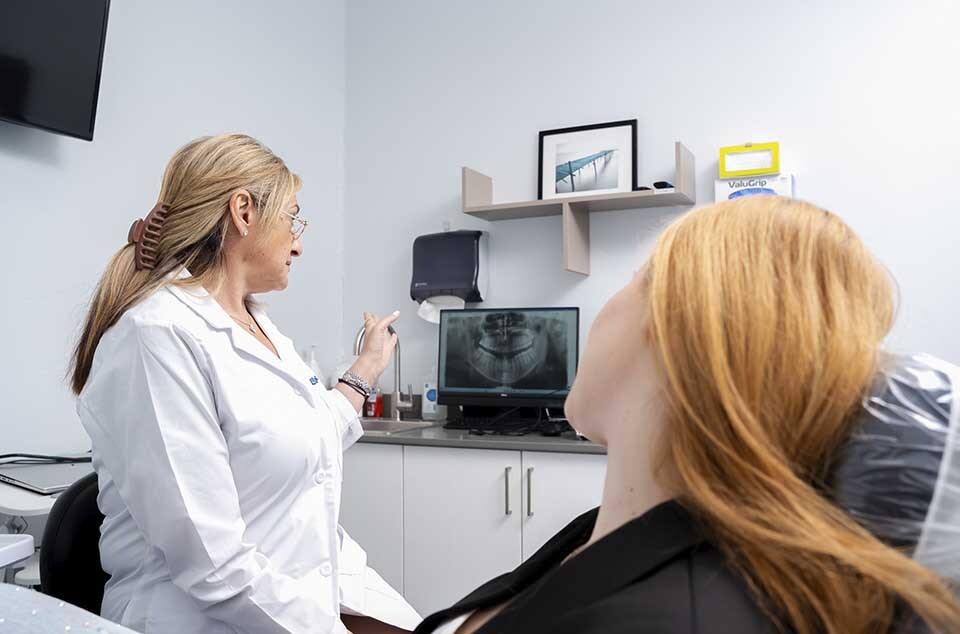
An oral exam will quickly determine whether your teeth are too small, and we will examine how your teeth bite together to check for any issues, such as misalignment. The next step is to discuss suitable options.
We can provide a custom treatment plan outlining possible options we believe will best help you. The plan will also outline the costs of each option.
Treatment Options for Small Teeth
Small teeth in adults can be treated in a variety of different ways, including those outlined below.
- Porcelain veneers.
- Porcelain crowns.
- Dental bonding.
- Gum recontouring.
- Orthodontics
Porcelain Veneers
Porcelain veneers can lengthen and widen teeth, creating a more aesthetically pleasing smile. Our veneers for small teeth are custom-designed and created from a durable, long-lasting porcelain.
Porcelain Crowns
If teeth are very small, covering them with porcelain crowns will provide the right shape, structure, and strength for each tooth.
Usually, when placing crowns, we must first prepare the tooth, reshaping it and removing some tooth structure. This may be unnecessary when a tooth is already quite small, so treatment is minimally invasive.
Dental Bonding
Dental bonding can be used to restore small teeth, creating proper tooth shape while also helping to prevent tooth decay and reduce the risk of future broken tooth incidents. This might be a suitable option if microdontia affects only one or two teeth that need to be enlarged slightly.
Gum Recontouring
If a gummy smile causes the issue, our cosmetic dentists can carefully recontour the gum tissue to create a more aesthetically pleasing appearance. Sometimes we may recommend placing porcelain veneers as well to create a more beautiful smile.
Orthodontics
Sometimes orthodontics can help treat small teeth by closing gaps, improving bite alignment, and reducing wear from teeth grinding (bruxism) or uneven chewing forces that could lead to tooth pain. After treatment, we can discuss improving the overall appearance of the teeth, if necessary, with porcelain veneers or crowns.
Small or uneven teeth can affect your smile and confidence, but there are effective cosmetic and restorative solutions available. At Dental Pearl Miami, our experienced team can help you achieve a balanced, beautiful smile. Call (305) 816-6620 or make your dental appointment today to learn your options.
Dental Pearl Miami14771 Biscayne Blvd.,
North Miami Beach, FL 33181
(305) 816-6620
Updated on by Dr. Ella Dekhtyar, DDS (Cosmetic & Family Dentist) of Dental Pearl Miami