

What Is Tooth Pain?
This problem occurs when a tooth or the surrounding tissues start to hurt, often signaling underlying issues like decay of the teeth, dental infection, or a damaged tooth. Sometimes the reason is obvious and easy to treat. For example, if you have impacted food between your teeth, it can shift them out of place, causing them to feel painful. Gently flossing around the tooth may be all that’s needed to relieve the discomfort.
It’s also quite common to experience some minor tooth sensitivity after a filling, and the sensation should quickly disappear within a day or two after treatment. If it doesn’t, please get in touch with us, as the filling might be a little too high and will need adjusting so you can bite together comfortably.
Types of Tooth Pain
The intensity of discomfort can vary considerably. Some people experience minor discomfort or pain when they bite down. Other times, it can be more persistent and present as a sharp or throbbing pain.
When a tooth hurts for more than a day or two, it’s a sign that something is wrong. We strongly recommend not ignoring the symptom; instead, schedule an appointment with us at Dental Pearl.
Common Causes of Tooth Pain
Numerous issues can cause a toothache, including:
- Tooth decay or a failing and leaking filling.
- Gum disease.
- Dental abscess.
- Impacted wisdom teeth.
- Cracked teeth.
- Teeth grinding and clenching (bruxism).
- Sinus infections.
- Sensitive teeth.
- Bleeding of the gums.
When Is a Toothache an Emergency?
We know there is a temptation to ignore a toothache initially and to hope it goes away. However, there are times when a toothache can become a dental emergency. On very rare occasions, it can become life-threatening, for example, if a tooth infection begins to impact overall health.
Symptoms to watch out for include:
- Severe toothache that cannot be controlled with over-the-counter pain relief.
- Developing a fever.
- Facial swelling.
- When a toothache is caused by trauma, such as a blow to the mouth, and the tooth has been substantially damaged.
If you experience any of the symptoms, please contact us immediately. We can discuss your symptoms over the phone, provide helpful advice, and schedule an appointment with our dentist.
Diagnosing Tooth Pain
Our dentist will not take long to diagnose the cause of your tooth pain. Below is a brief outline of the process.
- Dental Exam and Diagnostics
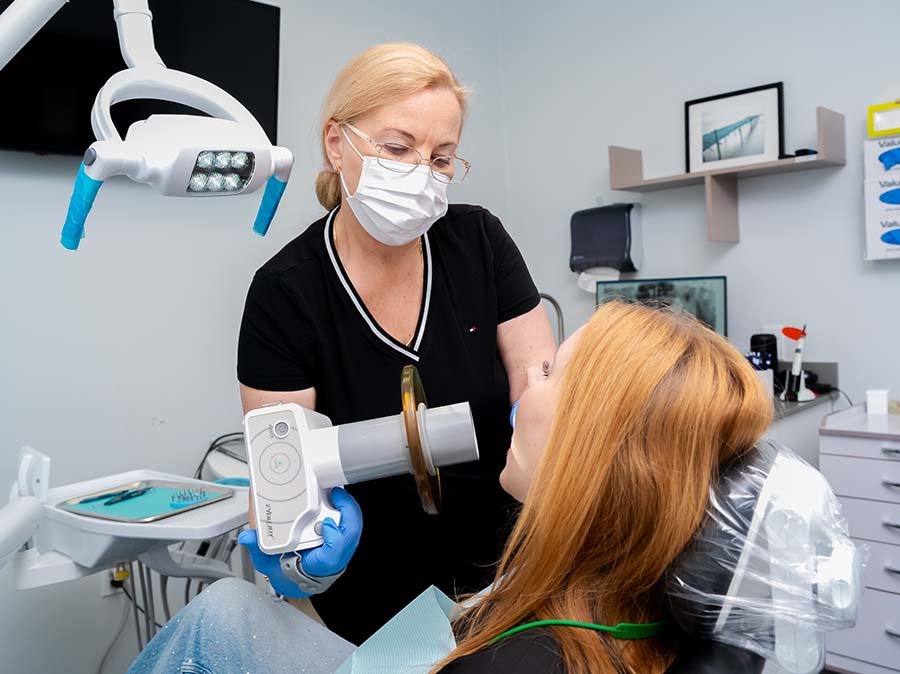
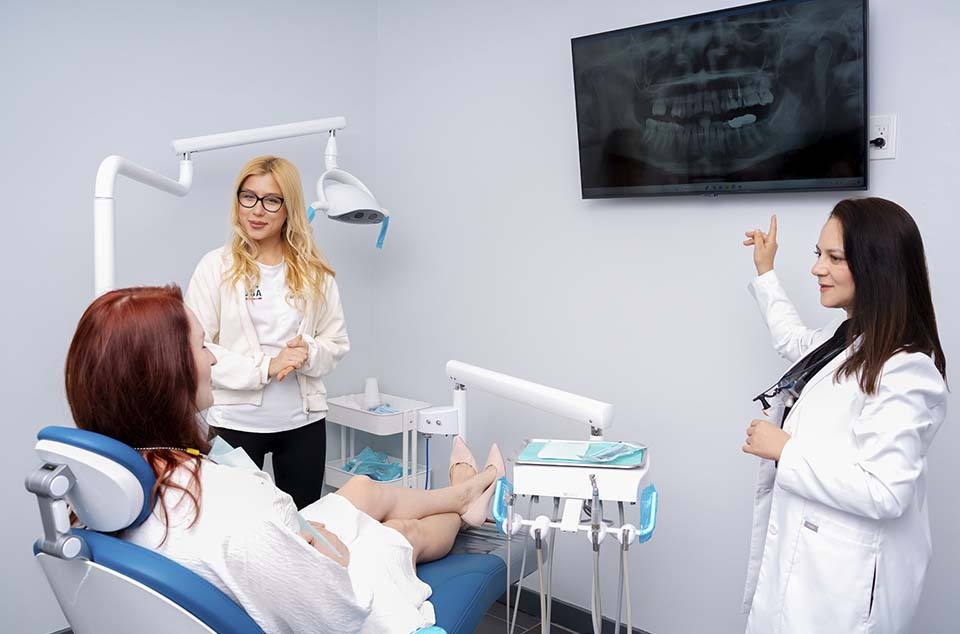
The first step is to gently examine your tooth for any visible signs of infection or decay. Diagnostic imaging will include Digital dental X-rays.
We may also wish to take other diagnostic images, such as a cone beam CT scan. This provides clear 3-D images of your teeth and jaws, allowing our dentist to evaluate the situation more clearly.
- Immediate Pain Relief
Once we identify the cause of your tooth pain, we will provide immediate relief. We can also prescribe antibiotics for a severe tooth infection and painkillers for home use if needed.
- Custom Treatment Plan
After assessing your tooth, we can provide a custom treatment plan identifying the treatments we recommend. We will explain this plan clearly, and it includes estimates for all the work suggested.
Treating Tooth Pain
Your treatment plan will focus on relieving pain and, where possible, restoring the tooth. The plan may include one or more of the following treatments.
Dental Fillings
A tooth-colored dental filling can mend small or medium-sized holes or cavities in teeth. We may recommend this option if you have tooth sensitivity caused by tooth decay or a failing filling.
Larger cavities may require an inlay or onlay. These are stronger and more durable and are often used to repair significant decay affecting back teeth.
Root Canal Treatment
If the innermost parts of the tooth, called the dental pulp, are infected, you will need root canal treatment. This treatment cleans out the dental pulp and root canals in your tooth roots, eliminating the infection and allowing us to seal the tooth permanently. Afterward, it will most likely need a dental crown to fully restore it.
Periodontal Treatment
If gum disease is causing tooth pain and gum tenderness, we can provide suitable treatment to eliminate or control the infection.
Dental Crown
If you have a severely cracked tooth or a tooth with substantial decay, a dental crown can cover it entirely. It offers excellent protection while restoring the tooth’s strength and appearance.
Tooth Extraction
Not every tooth can be saved; for example, if you have a dental abscess, we must remove the tooth to allow the infection to drain. We will also recommend tooth extraction for wisdom tooth pain.
We only recommend tooth extraction when necessary and when no other option is viable.
Custom-Made Night Splint
Tooth pain caused by clenching and grinding can often be treated with a custom-made night splint. This tough thermoplastic appliance will fit comfortably over your upper teeth, so that when you try to clench and grind your teeth, they will grind harmlessly against the night guard.
What If Tooth Pain Is Not Due to a Dental Issue?
Not all toothaches are due to dental problems. Some can be caused by sinus infections, especially those affecting the upper back teeth nearest to the sinus cavities.
The sinus cavities are air-filled spaces, but if you have an infection, they can become filled with mucus, increasing the pressure on your upper back teeth and causing pain. If we suspect this is the reason for your tooth pain, we will recommend that you schedule an appointment with your health care provider.
Home Care Tips for Tooth Pain
You cannot cure tooth pain at home, but you can relieve the symptoms. Below are some easy tips to follow until you see our dentist for professional care.
Use a Saltwater Rinse
This is an easy yet effective way to help reduce pain and inflammation, using just a teaspoon of salt dissolved in a cup of warm water, which can be swished gently around your mouth. You can use this saltwater rinse several times a day.
Hydrogen Peroxide
Using hydrogen peroxide can help relieve tooth pain and treat inflammation, but you must never use it neat. It must be diluted with equal parts of water, and after using it, you must spit out the excess and should never swallow it.
Ice Pack
Pain and facial swelling can be soothed with a homemade ice pack. Wrap it in a clean towel and hold it against your face for up to 20 minutes. Remove it for at least 20 minutes before reapplying it.
Tooth pain can disrupt your daily life and may signal an underlying issue that needs care. At Dental Pearl Miami, we diagnose the cause and provide effective relief. Call (305) 816-6620 or schedule your dental appointment today.
Dental Pearl Miami14771 Biscayne Blvd.,
North Miami Beach, FL 33181
(305) 816-6620
Updated on by Dr. Ella Dekhtyar, DDS (Cosmetic & Family Dentist) of Dental Pearl Miami